
Improvement is possible:After a stroke or neurological injury, bladder or bowel control may be affected. With practice, healthy routines, and professional support, meaningful improvement is often possible.
What is bladder and bowel control?
Continence is the ability to store urine and stool and empty the bladder or bowel at an appropriate time and place. After a stroke or neurological injury this control may be impaired, but consistent routines, practice, and professional support can help.
Why it matters
- Reduces leaks and accidents
- Helps keep the skin healthy
- Reduces complications and infections
- Supports independence and self-confidence
- Improves quality of life and participation in rehabilitation
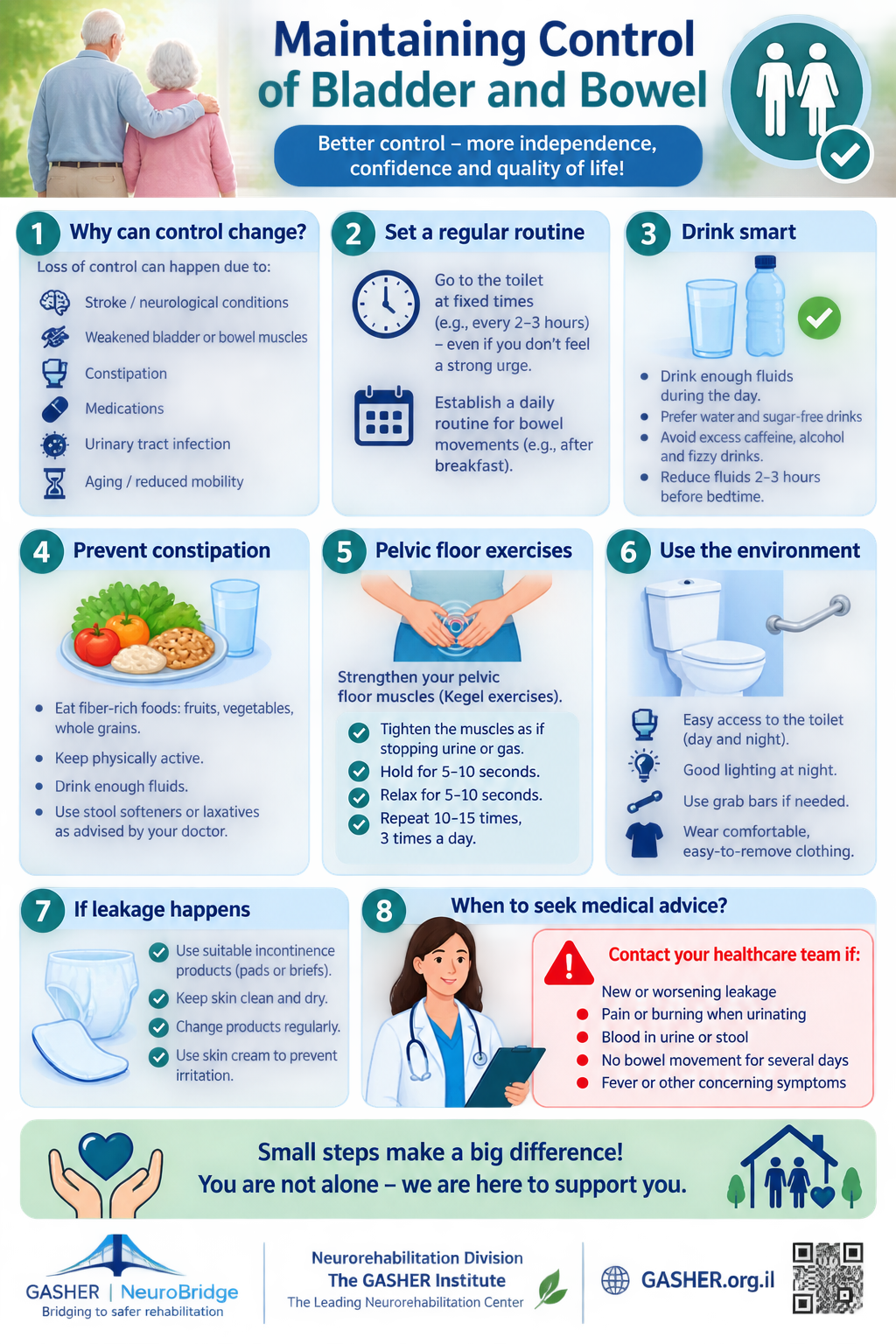
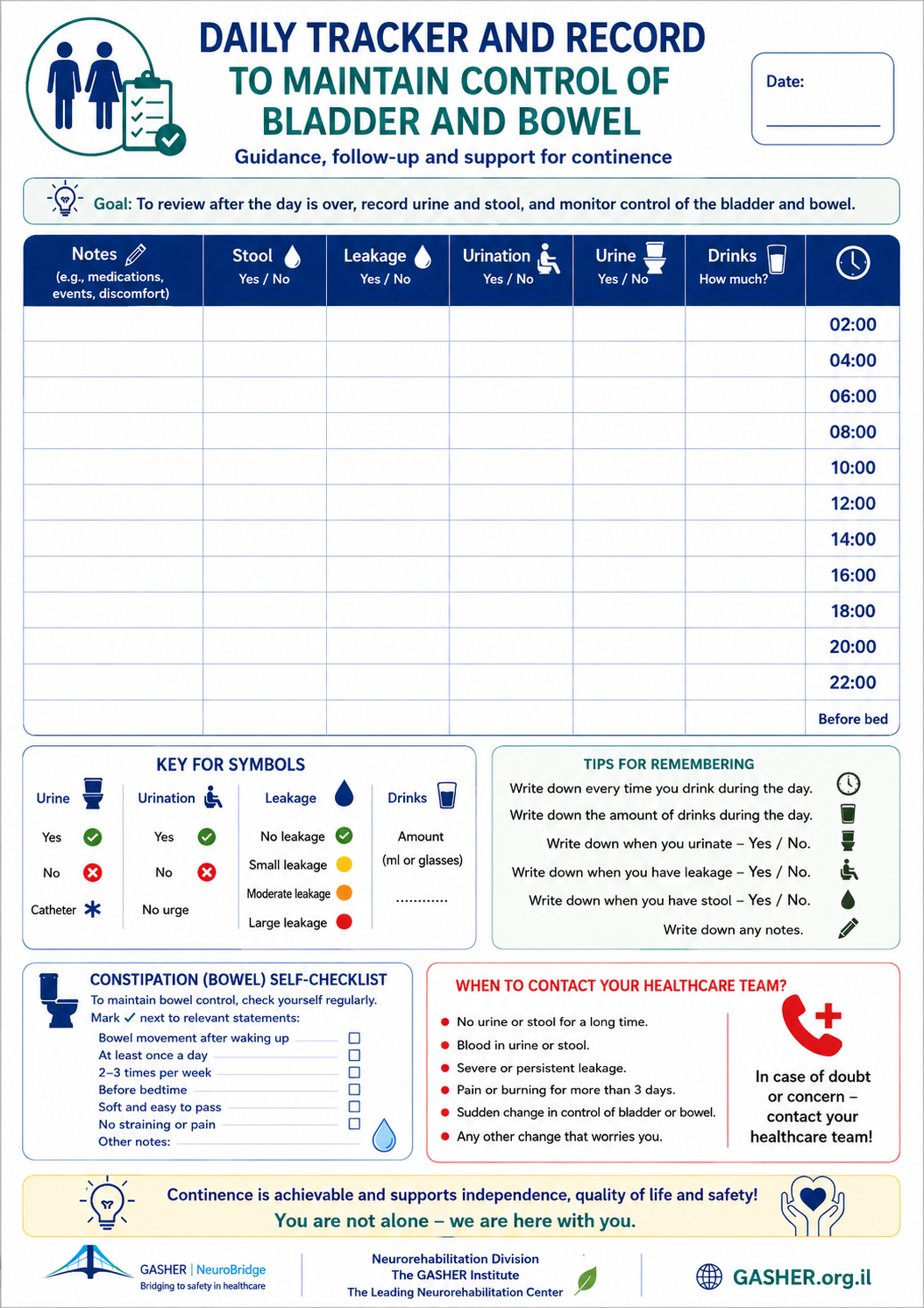
Principles for maintaining and improving control
Daily habits that support continence and independence
Scheduled toileting
Use the toilet at regular times during the day (about every 2–3 hours), even when there is no strong urge.
Adequate fluids
Drink water regularly during the day, and avoid large amounts of fluid close to bedtime.
Good toileting position
Sit comfortably with your feet supported, allow enough time, and try to relax.
Pelvic floor strengthening
Pelvic floor (Kegel) exercises can improve muscle control. Ask your rehabilitation team for exercises appropriate for you.
Healthy diet and constipation prevention
Eat fiber-rich foods, drink enough water, and stay physically active according to your ability.
Evening and nighttime routine
Consider reducing fluids about two hours before bedtime and empty your bladder before going to sleep.
Additional tips
- Wear comfortable clothing that is easy to remove
- Use appropriate absorbent products when needed
- Keep the skin clean and dry
- Ask for help when needed — there is no shame in doing so
- Every small improvement is meaningful progress.
When should you contact the healthcare team?
Family support is an important part of the process
With patience, encouragement, practice, and consistency, many people can improve control, confidence, and quality of life.