Preventing Constipation at Home After Discharge
Constipation is common after hospitalization and rehabilitation. It may be related to changes in diet, reduced physical activity, insufficient fluid intake or certain medications. Regular bowel habits, appropriate nutrition, adequate fluids and activity according to ability can help support healthy bowel function.
Key guidance in one image
Click the image to view it in a large and clear format.
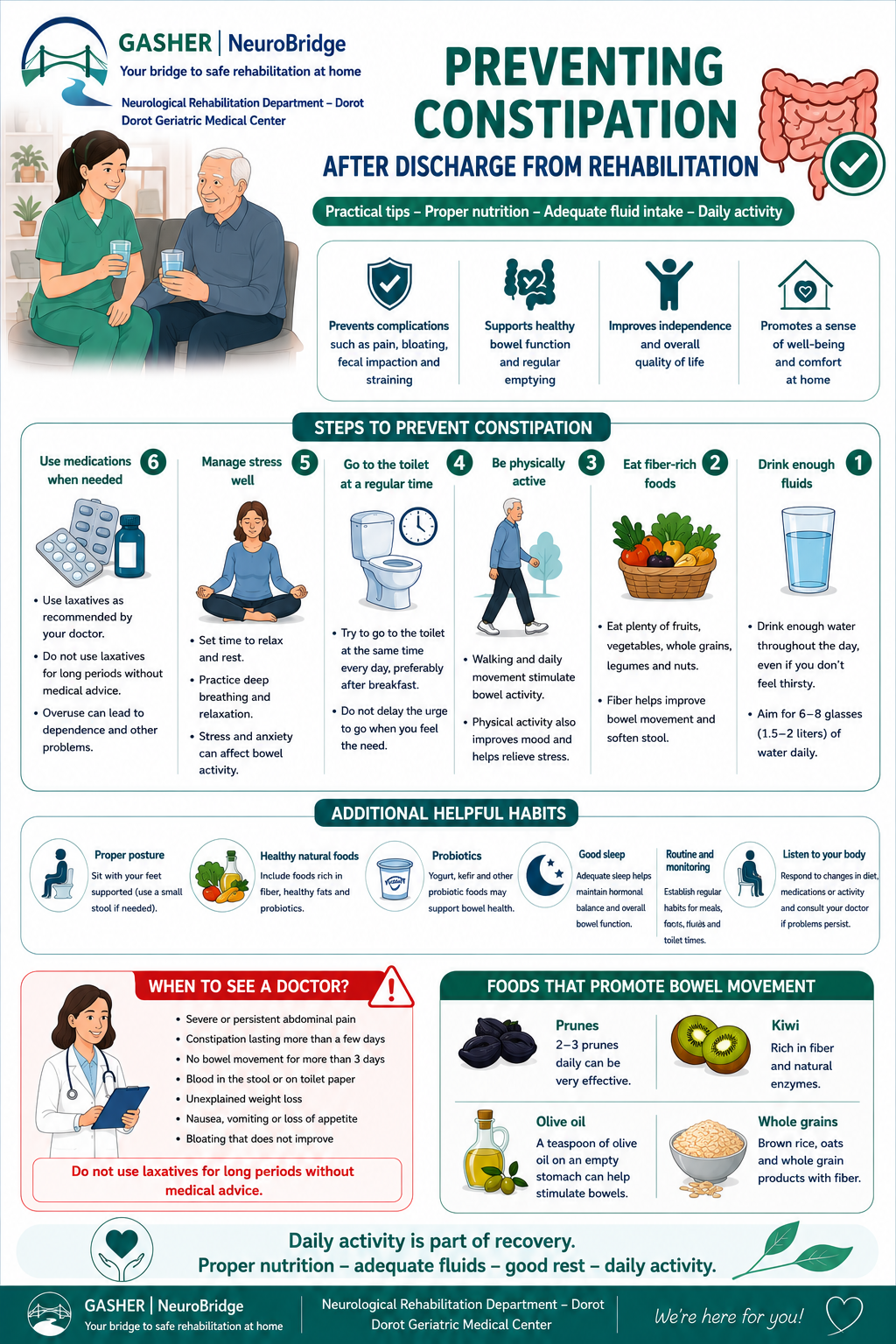
Full guide – direct viewing
Three things that may help every day
It is important to know the patient's usual bowel pattern. Not everyone needs to have a bowel movement every day. The key is to notice a change from the usual pattern, difficulty passing stool or unusually hard stools.
Include fiber-rich foods
Vegetables, fruit, legumes and whole grains may help support bowel activity. Dietary changes should be introduced gradually and in accordance with the instructions given to the patient.
Maintain appropriate fluid intake
Fluids help dietary fiber work more effectively. If fluid intake is restricted because of a medical condition, follow the instructions provided by the healthcare team.
Keep moving
Walking and physical activity, according to ability and rehabilitation instructions, may support bowel activity and help maintain overall function.
Building a regular bowel routine at home
A few simple steps may help create more regular and comfortable bowel habits.
Do not ignore the urge
When you feel the need to have a bowel movement, try not to postpone going to the bathroom.
Give yourself time
Sit comfortably and avoid unnecessary straining or pressure.
Monitor changes
Pay attention to bowel movement frequency, stool consistency and changes from the usual pattern.
Maintain a routine
Regular meals, fluids, activity and a suitable time for using the bathroom may help support regular bowel habits.
When should you contact a healthcare professional?
Persistent constipation or unusual symptoms may require medical evaluation.
Warning signs that should not be ignored
- Blood in the stool or rectal bleeding.
- Persistent or significant abdominal pain.
- Vomiting.
- Unusual or severe abdominal swelling.
- Inability to pass gas together with constipation or abdominal pain.
- Fever or a significant change in general condition.
- Constipation that does not improve or a significant and persistent change in bowel habits.