Home Exercise After Discharge from Rehabilitation
Continuing exercise at home is an important part of the rehabilitation process. Regular, safe exercise that is adapted to the patient's abilities may help maintain strength, balance, mobility, and independence in daily activities. Continue according to the exercise plan and instructions provided by your rehabilitation team.
Key Guidance at a Glance
Click the image to view it in a larger, clearer format.
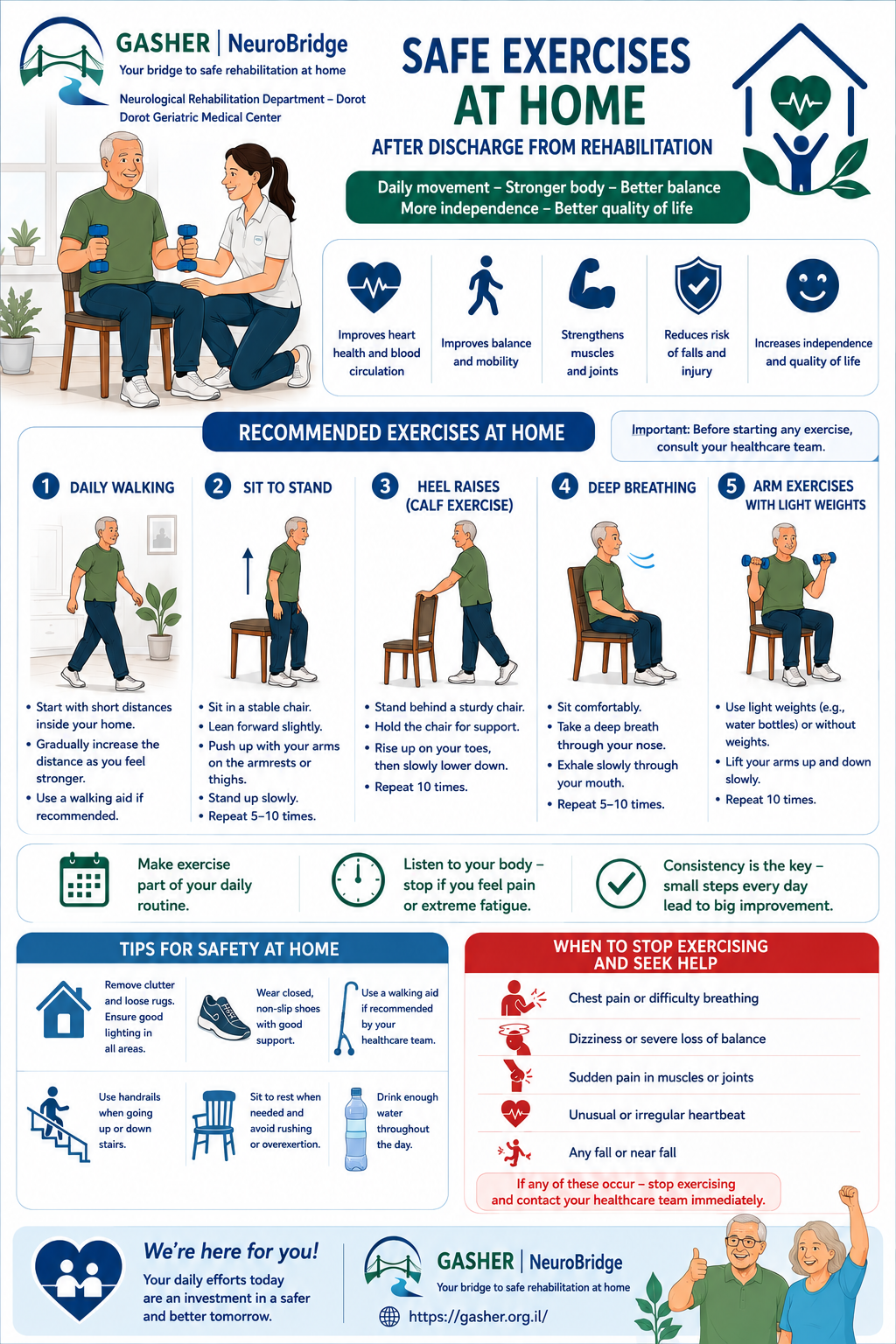
Full Guide – View Online
Three Important Principles for Exercising at Home
Good exercise does not need to be long or complicated. The important thing is that it is appropriate, regular, and safe.
Consistency Matters More Than Intensity
Include exercise in the daily routine according to the plan you received, and avoid activity that exceeds the patient's current ability.
Safety Comes First
Exercise in a stable, uncluttered area with good lighting. Use walking aids or support if these were recommended by the rehabilitation team.
Adapt Exercise to Ability
On days when the patient feels more tired or weak, reduce the pace or duration of exercise according to their condition and instructions.
Before You Begin
A quick safety check before exercise can help make the activity safer and more comfortable.
Prepare the Environment
Remove rugs, objects, and cables from the pathway and make sure the area is well lit.
Wear Appropriate Footwear
Use closed, comfortable, stable shoes if this was recommended during rehabilitation.
Start Gradually
Begin at a comfortable pace and progress according to ability and the rehabilitation plan.
Pay Attention to How You Feel
If unusual weakness, dizziness, pain, or instability develops, stop the exercise.
Exercising Safely at Home
After rehabilitation discharge, physical activity should be combined with attention to safety and fall prevention.
Standing and Balance Exercises
If there is a risk of falling, do not perform standing exercises alone. Use another person's assistance or the support recommended in the rehabilitation plan.
Fatigue Is a Signal to Stop
There is no need to exercise until exhaustion. Exercise can be divided into several short sessions during the day according to ability.
Keep Walking Aids Nearby
If the patient uses a cane, walker, or another mobility aid, make sure it is available when standing, walking, and exercising.
When Should You Stop Exercising?
New or unusual symptoms during activity require stopping and assessing the situation.
Warning Signs That Should Not Be Ignored
- Chest pain or chest pressure.
- Significant or unusual shortness of breath.
- Significant dizziness, feeling faint, or loss of consciousness.
- New or sudden weakness, speech changes, facial drooping, or another new neurological change.
- Severe or new pain that develops during exercise.
- A fall or injury during activity.
- A significant decline in function or inability to perform an activity the patient was previously able to perform.
Visiting Hours
Contact Us