
Colonization is not an illness:Resistant bacteria may be present in the body (on the skin, in the nose, bowel, urine, or wounds) without causing illness or symptoms. Colonization is not the same as an active infection and usually does not require special treatment at home.
What does this mean?
Resistant bacteria are bacteria that have become resistant to certain antibiotics, which can make infections harder to treat. They can live in the body without causing illness; in that situation, a person is considered colonized rather than infected.
Below are common examples of resistant bacteria. Measures to reduce spread are similar for most of them, although their specific characteristics differ.
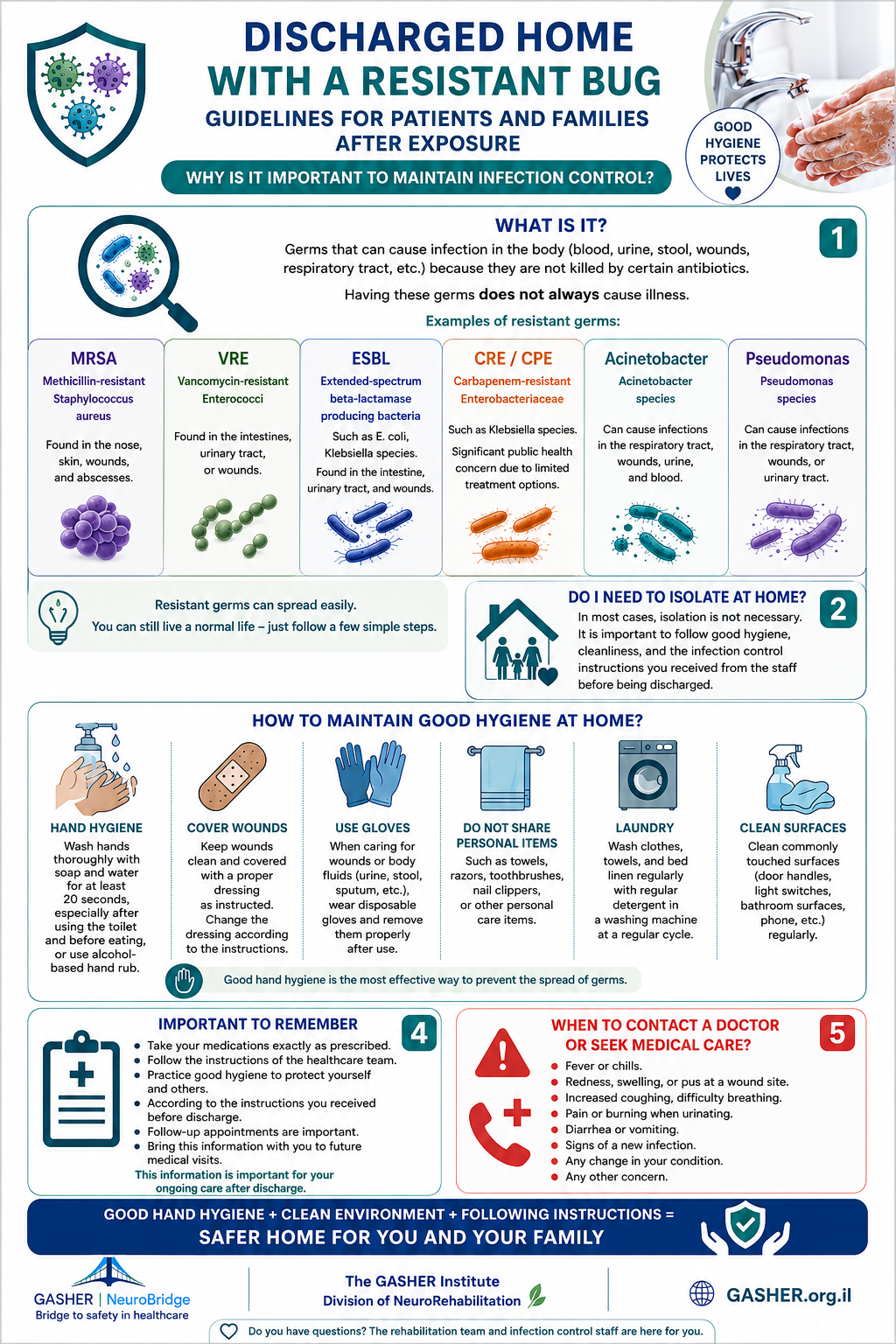
Full Guide: Resistant Bacteria at Home
Open the guide in a large, easy-to-read format.
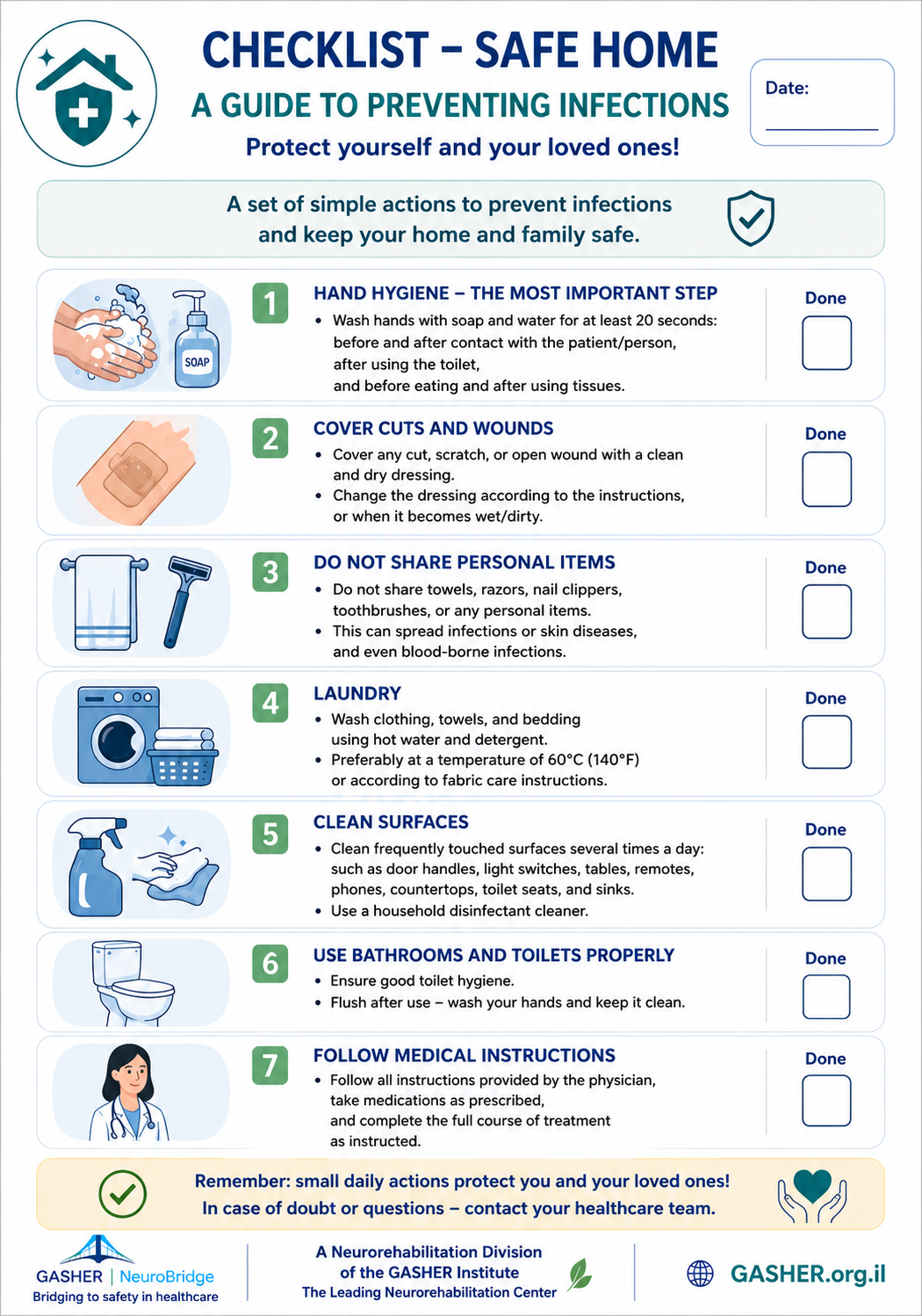
Home Safety Checklist
A separate printable checklist for patients and families.
Common types of resistant bacteria
Examples worth recognizing — there is no need to memorize the details
Methicillin-resistant Staphylococcus aureus (MRSA) — may be found in the nose, on the skin, and in wounds.
Vancomycin-resistant Enterococcus (VRE) — found mainly in the bowel, urine, or wounds.
Enterobacterales resistant to certain antibiotics, such as E. coli and Klebsiella — may be found in the bowel, urine, and other sites.
Carbapenem-resistant Enterobacterales (CRE/CPE), such as Klebsiella — tell healthcare staff about any previous colonization.
Acinetobacter — a resistant bacterium associated with healthcare settings that may cause infections in wounds, lungs, urine, and other sites.
Pseudomonas — a resistant bacterium that may cause urinary, wound, or respiratory infections.
Is isolation needed at home?
In most cases, hospital-style isolation is not needed at home. Focus on hand hygiene, proper wound care, routine environmental cleaning, and not sharing personal items. Follow any individual instructions you received at discharge.
How can spread at home be reduced?
Simple hygiene habits make the biggest difference
Hand hygiene
Clean your hands before and after providing care, wound care, or contact with secretions or body fluids.
Keep wounds clean and covered
Change dressings according to the care team’s instructions and discard used dressings promptly.
Use disposable gloves when appropriate
Wear gloves for wound care or contact with secretions, body fluids, soiled items, or personal-care equipment.
Do not share personal items
Do not share towels, razors, toiletries, clothing, or linens that come into contact with the skin.
Laundry and cleaning
Wash clothing, bedding, and towels at a temperature appropriate for the fabric, and clean household surfaces regularly.
Environmental cleaning
Regularly clean frequently touched surfaces such as handles and bathroom surfaces.
Tell healthcare staff
At clinic visits, medical treatment, hospitalization, or care in the community, tell the healthcare team about previous resistant-bacteria colonization and any instructions you were given at discharge. This helps staff take the right precautions.