Health Monitoring at Home After Discharge
After returning home, it is important to continue monitoring changes in health, daily function and general well-being. Simple and consistent observation can help identify changes early, support timely contact with the healthcare team and promote a safer rehabilitation process at home.
Key guidance in one image
Click the image to view it in a large and clear format.
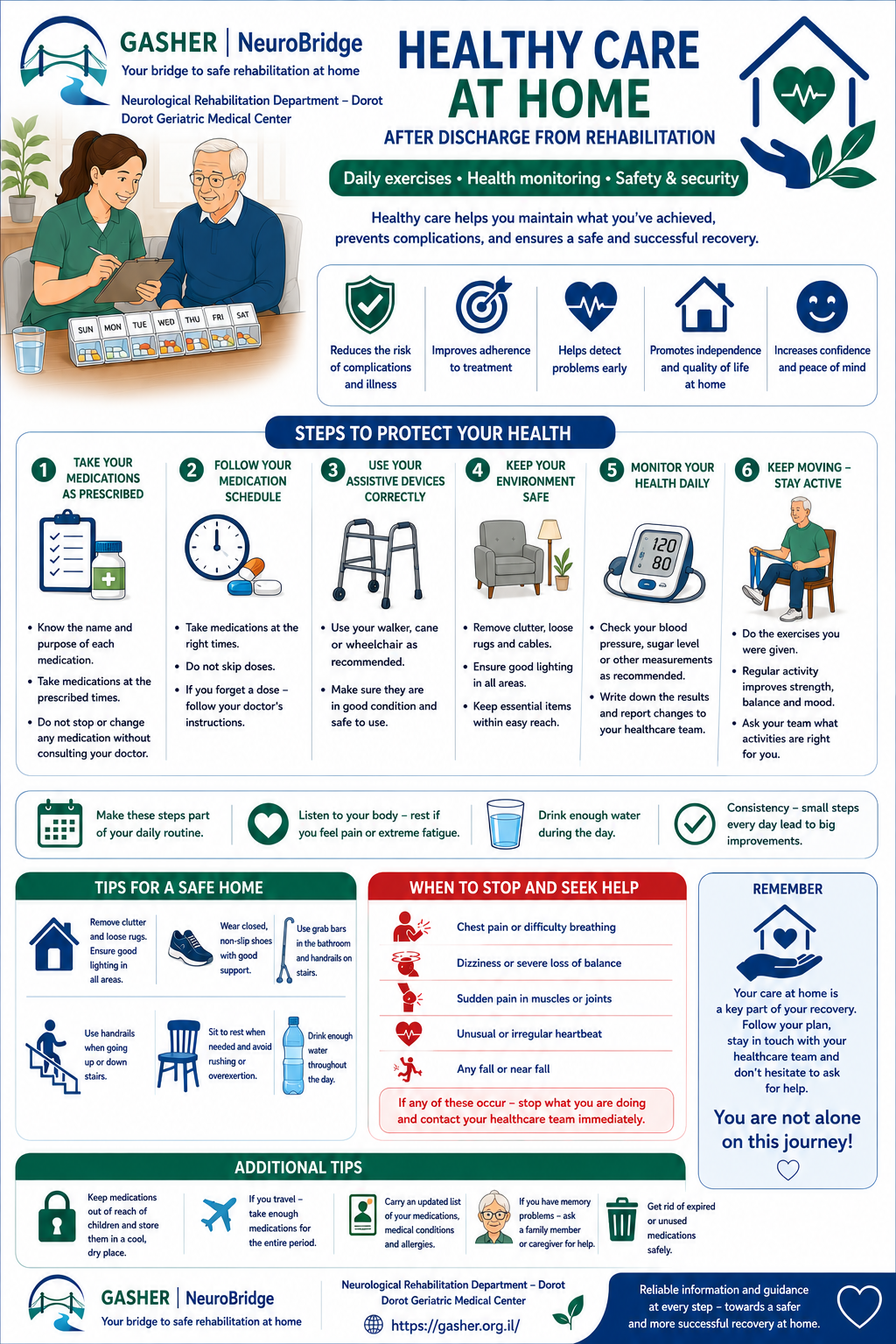
Full guide – direct viewing
Three things to check every day
There is no need to turn your home into a clinic. The goal is to know what is normal for you, notice meaningful changes and follow the instructions provided at discharge.
General condition and function
Pay attention to alertness, new weakness, changes in walking or balance, reduced function, new pain or any significant change from the usual condition.
Skin and pressure areas
Check the skin, especially the heels, pelvis and other pressure areas. Look for persistent redness, wounds, blisters, changes in skin color or any new skin damage.
Eating and swallowing
Watch for coughing or choking while eating or drinking, a wet or gurgly voice after swallowing, new swallowing difficulty or shortness of breath during meals.
When should you seek medical help?
A new or unusual change in the patient's condition should be taken seriously, especially after discharge from rehabilitation.
Contact your healthcare team
- New or persistent decline in daily function.
- A new wound, persistent redness or significant skin changes.
- Repeated coughing or difficulty while eating or drinking.
- A new change in appetite, fluid intake or general condition.
- Fever, new pain or another change that does not improve.
Warning signs that require immediate attention
- Sudden weakness or numbness, especially on one side of the body.
- New facial drooping.
- Slurred speech, difficulty speaking or difficulty understanding speech.
- Sudden changes in vision or balance.
- Severe breathing difficulty, loss of consciousness or a sudden change in awareness.
Suspected stroke? B.E. F.A.S.T.
The sudden appearance of one or more warning signs may be a medical emergency. Do not wait to see whether the symptoms improve. Seek emergency medical assistance immediately. In Israel: Magen David Adom 101.
Visiting hours
Contact us