Clexane at Home After Discharge
Clexane (enoxaparin) is an anticoagulant medication given by subcutaneous injection. If you have been advised to continue treatment at home, it is important to know how to administer the injection safely, follow the prescribed dose and schedule, and recognize warning signs that require medical attention.
Key Instructions at a Glance
Click the image to open a large, clear version.
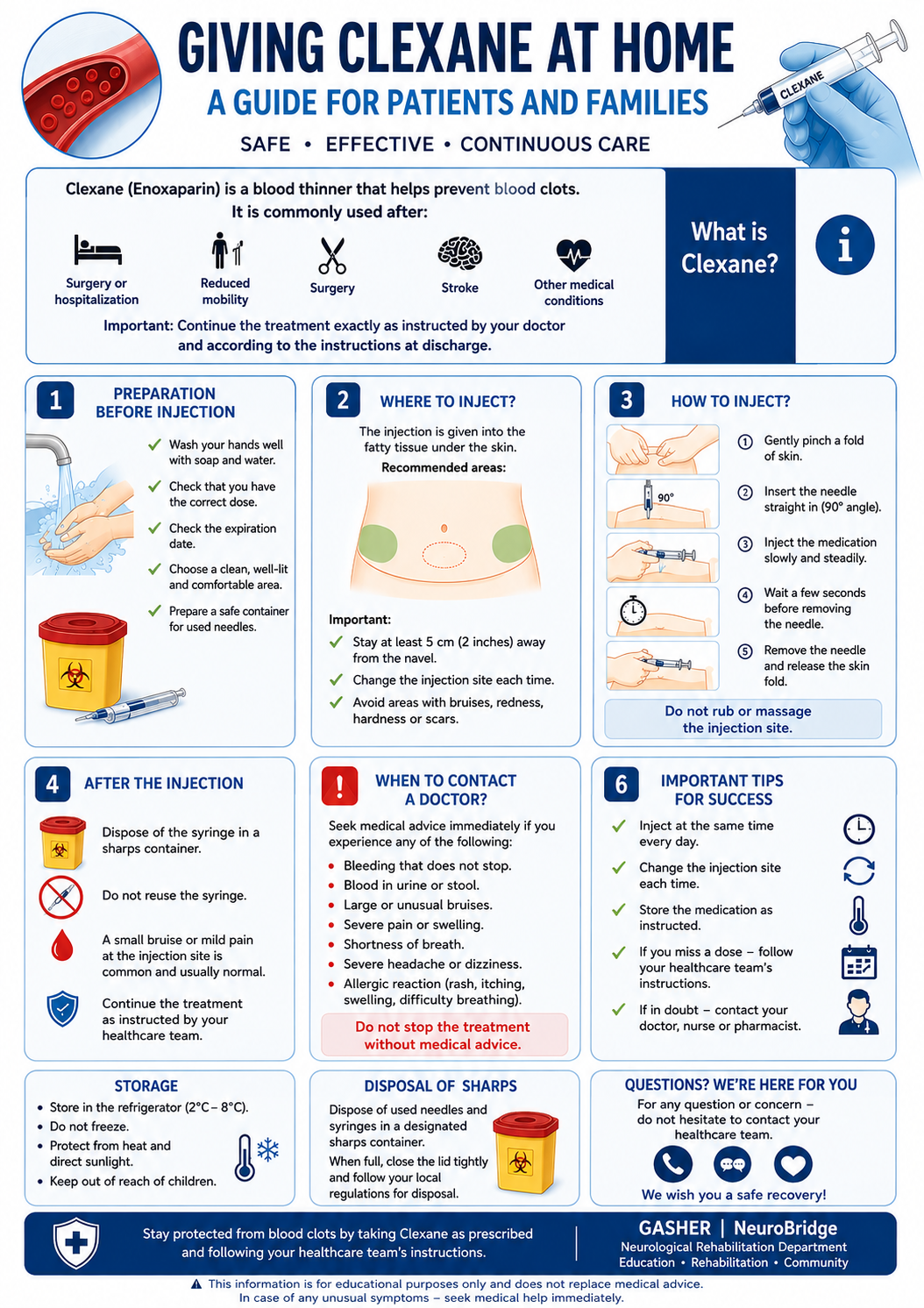
Full Guide – View Online
Steps for Giving the Injection at Home
Always follow the prescribed dose and the instructions provided in your discharge letter and by your healthcare team.
Prepare
Wash your hands thoroughly. Make sure you have the correct syringe and the dose prescribed for the patient. Check the syringe before use.
Choose the Injection Site
The injection is given into the fatty tissue under the skin of the abdomen, according to the instructions you received. Rotate injection sites and avoid areas that are injured, red, swollen, or significantly bruised.
Give the Injection
Administer the injection exactly as demonstrated by your healthcare team. Do not change the dose or frequency without medical advice.
After the Injection
Remove the needle carefully. Do not rub or massage the injection site, as this may increase bruising.
Dispose of the Syringe Safely
Do not place a used needle or syringe loosely in household waste. Follow the instructions you were given for the safe disposal of needles and other sharps.
Monitor
Watch for unusual bruising, bleeding that does not stop, or any new or unusual symptoms during treatment.
Three Things to Remember
Following a few simple rules can help make treatment at home safer and easier to manage.
Dose and Timing
Follow the prescribed dose and administration times listed in the discharge instructions or provided by your doctor.
Rotate Injection Sites
Change the injection site as instructed and avoid repeatedly injecting into exactly the same spot.
Watch for Bleeding
Because Clexane is an anticoagulant, pay attention to unusual bleeding, significant bruising, or new symptoms.
Common Mistakes to Avoid
Avoiding a few common mistakes can help make Clexane treatment safer at home.
Do Not Change the Dose Yourself
Do not increase, reduce, or stop the medication without medical advice.
Do Not Massage the Injection Site
Avoid rubbing or massaging the area after the injection, as this may increase local bruising.
Do Not Reuse the Syringe
Each syringe is for single use only. Dispose of it safely according to the instructions for sharps disposal.
When Should You Seek Medical Help?
During anticoagulant treatment, it is especially important to watch for signs of bleeding or significant changes in the patient's condition.
Warning Signs You Should Not Ignore
- Heavy bleeding or bleeding that does not stop.
- Blood in the urine or stool, vomiting blood, or coughing up blood.
- Large or multiple bruises without a clear reason.
- Severe weakness, dizziness, fainting, or unusual paleness.
- A severe or unusual headache, new confusion, changes in speech, new weakness, or another sudden neurological change.
- A fall or significant injury, especially a head injury while taking an anticoagulant.
- An unusual reaction after the injection or any other significant change that causes concern.
Visiting Hours
Contact Us