Urinary Catheter Care at Home After Discharge
A urinary catheter allows continuous drainage of urine from the bladder. Proper catheter care at home helps maintain cleanliness, supports free urine flow, and reduces the risk of infection and other complications. This page provides simple guidance for patients and family members to support safe care after discharge from rehabilitation.
Key Instructions at a Glance
Click the image to open it in a larger, easy-to-read view.
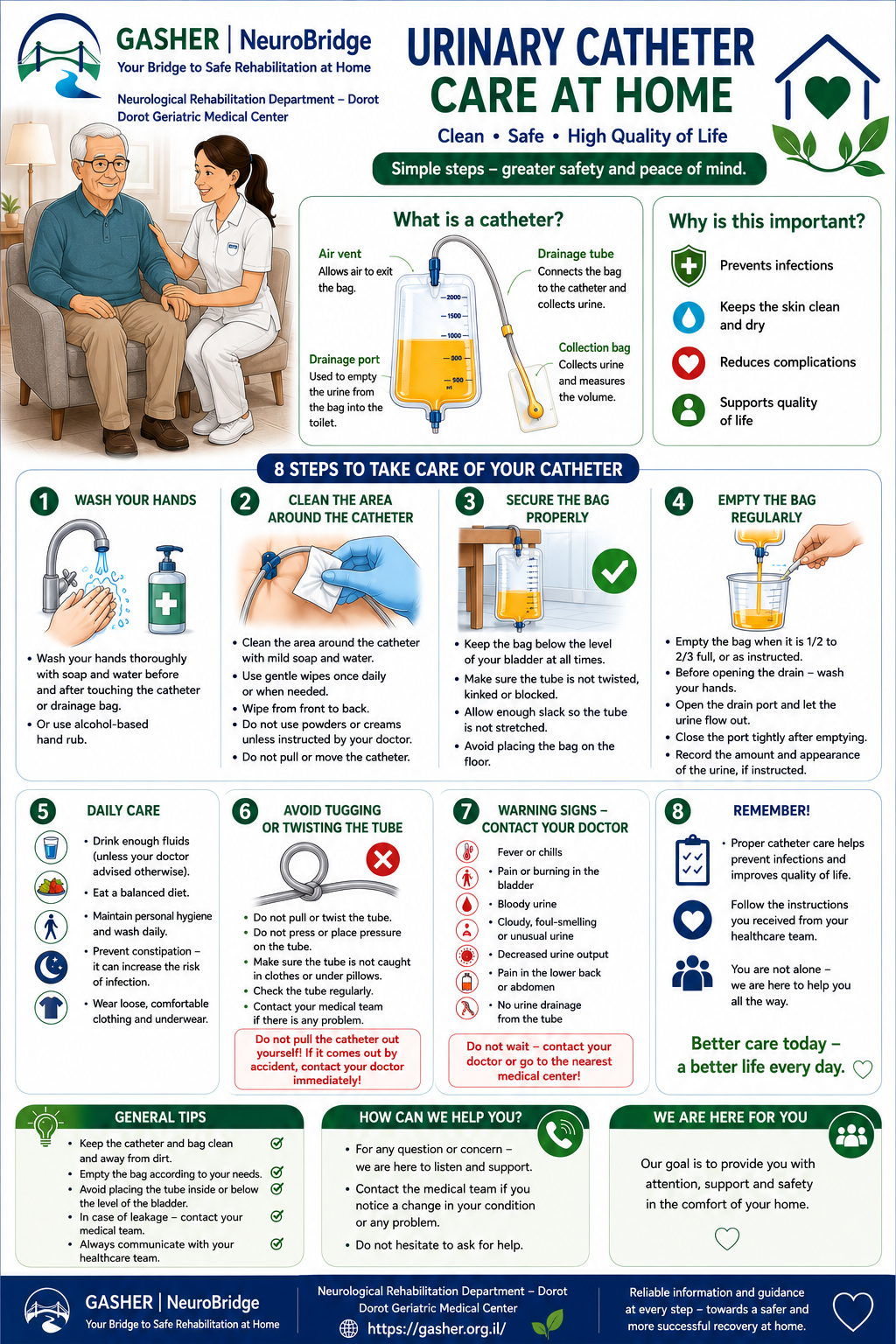
Full Guide — View Online
Three Important Rules for Daily Care
Simple and proper daily care can help protect the catheter, reduce pulling or blockage, and lower the risk of infection.
Keep Your Hands Clean
Wash your hands thoroughly with soap and water before and after touching the catheter, tubing, or drainage bag.
Keep the Area Clean
Keep the area where the catheter enters the body clean according to the instructions you received. Avoid pulling or tugging on the catheter.
Keep the Bag Below Bladder Level
Keep the drainage bag below the level of the bladder and do not place it on the floor. Make sure the tubing is not kinked or compressed.
A Quick Check During the Day
A few simple checks can help identify problems early and maintain proper urine drainage.
Check the Tubing
Make sure the tubing is not kinked, blocked, compressed, or stretched.
Check Urine Flow
Make sure urine continues to drain into the bag according to the patient's usual pattern.
Check the Drainage Bag
Empty the bag regularly before it becomes overly full, following the instructions you were given.
Watch for Changes
Look for pain, urine leakage around the catheter, unusual changes in the urine, or changes in general condition.
What Should You Avoid?
These simple precautions can help protect the catheter and drainage system.
Do Not Pull the Catheter
Pulling or tugging can cause pain, injury, or partial displacement of the catheter.
Do Not Raise the Bag Above the Bladder
Keep the drainage bag below bladder level during use.
Do Not Disconnect the System Unnecessarily
Avoid unnecessary disconnection between the catheter and the urine drainage system.
When Should You Contact a Healthcare Professional?
Certain changes may indicate blockage, infection, or another problem that requires medical assessment.
Warning Signs You Should Not Ignore
- Fever, chills, or a significant change in general condition.
- New or significant pain in the lower abdomen, pelvis, or back.
- Urine stops draining or the amount decreases significantly, especially if accompanied by pain or a feeling of bladder fullness.
- Significant urine leakage around the catheter.
- Significant blood in the urine, blood clots, or an unusual and persistent change in urine color.
- Pain, redness, swelling, or unusual discharge around the catheter insertion area.
- The catheter falls out, is pulled out, or appears to have moved out of position.
Visiting Hours
Contact Us